
Settlement Explained: How Money Really Moves After a Mobile Payment in the DRC
A customer taps "confirm," the screen flashes green, and a merchant receives a notification: payment received. For everyone involved, the transaction feels finished. But in payments, that green screen is only the beginning of the story. The part that decides whether a business can actually pay its suppliers, staff and rent is something far less visible: settlement.
What is settlement?
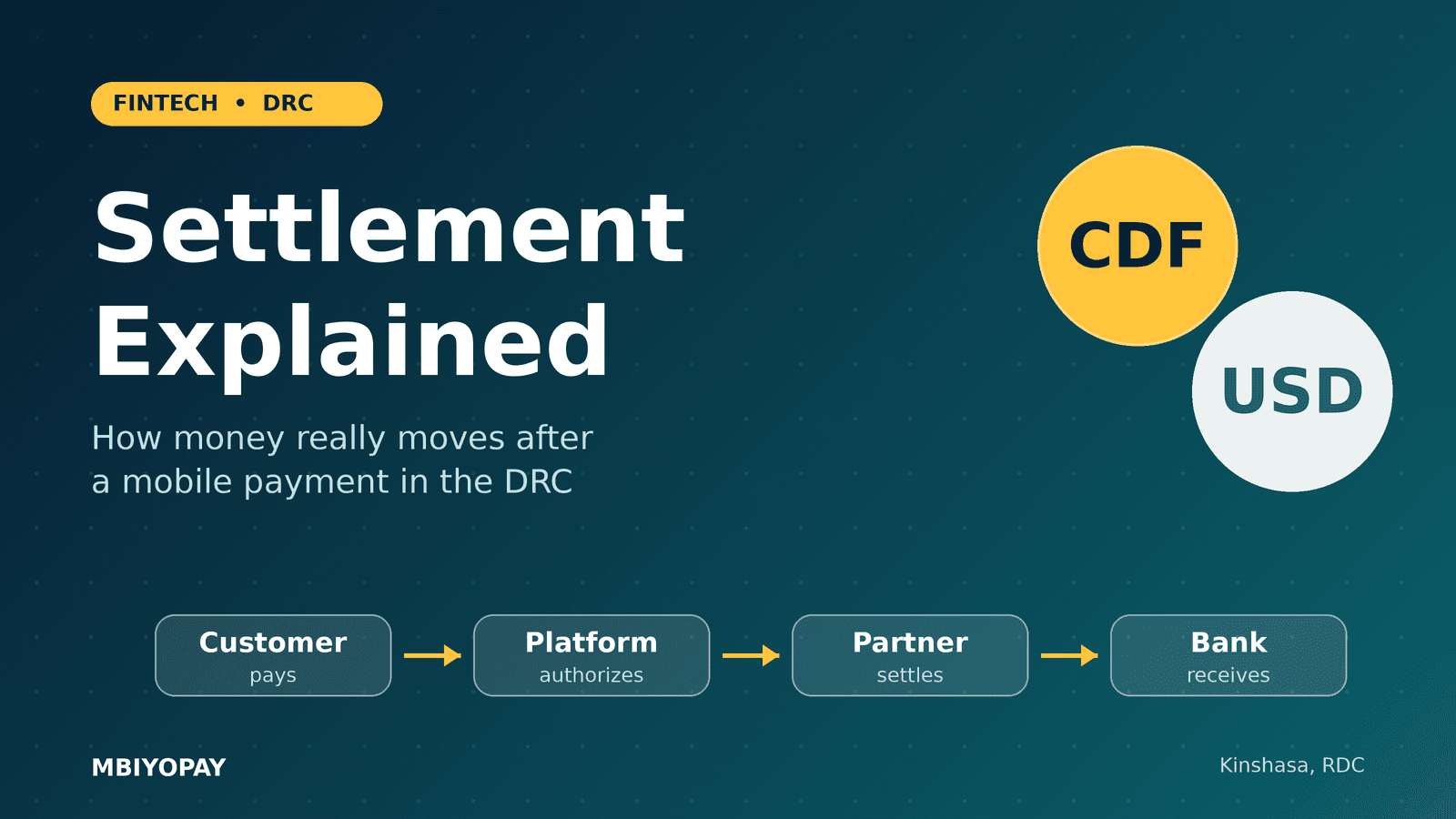
When a customer pays through a mobile wallet, card or payment platform, two things happen at different speeds. First comes authorization, which is instant: the platform confirms the payment is valid and records it. Second comes settlement, which is the actual transfer of funds from the payment partner or institution to the merchant's bank account.
Put simply, authorization tells you that you are owed money. Settlement is when that money arrives.
Why settlement matters so much for Congolese businesses
In markets where cash flow is tight and many businesses operate on thin margins, the gap between "payment received" and "funds available" can make or break daily operations. A shop owner who has sold stock but cannot access the proceeds cannot restock. A service provider waiting on a transfer cannot pay salaries on time.
Three features of the Congolese context make settlement especially important:
Dual-currency reality. Businesses routinely operate in both Congolese francs (CDF) and US dollars (USD). Settlement has to account for both, with clear records of what is owed in each currency.
Multiple intermediaries. A single payment can pass through a payment platform, a partner institution and a bank before reaching its destination. Each step is a point where delays or mismatches can occur.
Reconciliation pressure. Merchants and fintechs need to match what customers paid against what actually landed in the bank. Without clean records, small discrepancies turn into long disputes.
What a good settlement request looks like
Behind the scenes, fintechs regularly submit formal settlement requests to their partners and institutions to claim the balances due to them. A well-prepared request is clear, traceable and easy to action. In our experience, it should include:
A unique reference. Every request should carry an identifier so both sides can track it from submission to confirmation.
Exact amounts, by currency. CDF and USD totals should be stated separately and never blended, so there is no ambiguity about conversion.
Verified beneficiary details. The receiving bank, account number and account holder name must be accurate and match the institution's records. A single wrong digit can send funds astray or trigger a rejection.
Company identification. Registration and tax identifiers help the partner confirm they are dealing with the right legal entity.
A request for proof of payment. A payment advice or transfer confirmation closes the loop and makes reconciliation possible.
Common pitfalls
Even well-run businesses stumble on the same issues:
Mismatched account names. Banks increasingly check that the account holder name aligns with the beneficiary on record. Mismatches cause delays.
Unclear currency breakdowns. When CDF and USD amounts are mixed in a single figure, finance teams on the other side must stop and ask questions.
No follow-up trail. Requests sent without a reference, or not followed by a confirmation request, are easy to lose.
Delayed reconciliation. Waiting weeks to check whether funds arrived makes discrepancies far harder to trace.
Practical tips for merchants and fintechs
Reconcile daily or weekly, not monthly. Small gaps are easier to resolve while they are fresh.
Keep separate ledgers per currency so each balance can be audited on its own.
Confirm beneficiary bank details in writing before every new settlement arrangement, and re-verify when anything changes.
Always ask for a payment advice once funds are sent, and file it with your records.
Protect your account information: share banking details only through official, verified channels.
The bigger picture
Digital payments in the DRC are growing, and with them the expectations placed on the infrastructure underneath. Fast checkout experiences build customer trust, but reliable settlement builds business trust. The fintechs and partners that treat settlement as a core product, with transparency, speed and clean documentation, will be the ones merchants rely on.
At MBIYOPAY, we believe that a payment is only truly complete when the money reaches the people who earned it. That is the standard we hold ourselves to, and the one we encourage across the ecosystem.
Want to learn more about how we support merchants and partners in the DRC? Get in touch with our team at joe@mbiyopay.com.